Pantry Organizing That Survives the Next Grocery Run
A pantry only works if it still works on the day after a big shop, so build it around that day.
September 30, 2026 · 3 min read
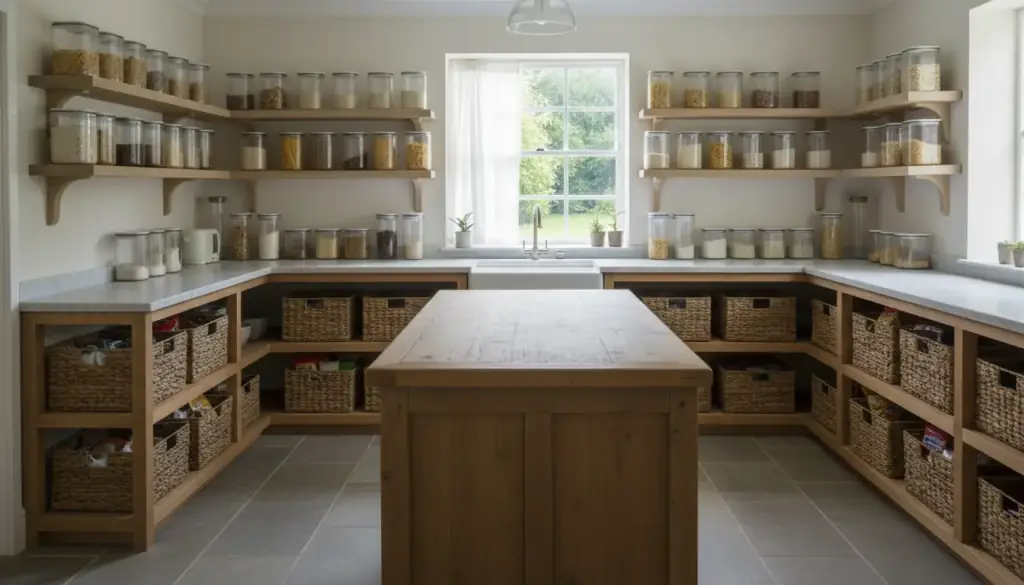
Plenty of pantries look great for a weekend. Then the next grocery run arrives, the bags hit the shelf, and everything slides back to where it was. The fix isn't more willpower. It's a layout that makes putting things away the easy option. Here's how to build one, for a walk-in pantry, a single cabinet, or a tall cupboard beside the fridge.
Empty it and look at what you actually eat
Take everything out. Yes, everything. Wipe the shelves, then sort the contents on the counter by type: baking, pasta and grains, canned goods, snacks, breakfast, oils and sauces, and whatever else your household keeps around. While you sort, check dates and toss what's expired or stale.
Pay attention to what shows up in multiples. Four open bags of the same rice or six half-used spice jars tell you the old system wasn't letting you see what you had. Combine what you can, and donate unopened, in-date items you know your family won't eat. Call ahead to find out what your local drop-off accepts.
Build zones around how you cook
A zone is a home for a category. When every category has one spot, anyone in the house can put groceries away correctly without asking. Start by grouping items the way you use them, not the way they sit on the store shelf.
- Put baking supplies together: flour, sugar, leaveners, extracts, chocolate chips.
- Keep breakfast items in one place so mornings don't start with a search.
- Group the pasta, rice and grains with the sauces and canned tomatoes you cook them with.
- Give snacks their own bin or shelf, ideally at a height the kids can reach.
- Set aside a spot for the things you buy in bulk, so the overflow has an address.
Leave a little empty space in each zone. A zone packed to the edge has no room for the next shop, and that's exactly where the pile-up begins.
Decant into clear containers, selectively
Clear containers make the contents visible, stack cleanly, and keep dry goods fresh once the original bag is open. They're worth using for the items you reach for weekly: flour, sugar, rice, cereal, pasta, snacks. They are not worth using for everything. A sealed can or a box that already stacks fine doesn't need a new home.
Measure the shelf before you buy anything. Check the depth, the width, and the height between shelves, then pick containers that fit those numbers with a finger's width to spare. Square containers waste less room than round ones. Label each one on the front with a plain word, and add the expiration date on the lid if the original package is going in the recycling.
Use eye level for what you use most
Eye level is your most valuable shelf, so give it to the daily items: what you grab for breakfast, lunch boxes, and the weeknight dinner staples. Put heavy things low, where you can lift them without stretching. Put the things you need once a month, like holiday baking supplies or the big stockpot, up high.
Baskets and bins on lower shelves solve the reach problem. Pull a bin out, and the back of the shelf comes with it. Wide shallow bins work better than deep ones for small packets, since deep ones bury whatever falls to the bottom.
A reset habit that takes five minutes
Systems fail when they need a big weekend to maintain. Give yours a small recurring reset instead. Right before you shop, open the pantry and take a quick look at what's running low. Write the list from what you see, not from memory.
When the bags come home, put the new items behind the old ones, so the oldest food gets used first. Fold the empty bags, return stray items to their zones, and wipe any spills right then. The whole routine takes about as long as a song. Do it every time, and the pantry never drifts far enough to need another big overhaul.
Getting help when the pantry is bigger than a cabinet
Some pantries need more than a weekend and a few containers. Orderly Abode helps with pantry organizing as part of its home organization work, and with pantry design when shelving itself is the problem. Sessions are collaborative and tailored, so the zones end up matching how your household really cooks and shops.
If you're in Lake in the Hills or anywhere in McHenry, Kane or DuPage County and want a second set of hands, call (224) 609-7393 or email stacie@orderly-abode.com to schedule a free consultation.
Orderly Abode, (224) 609-7393
Call (224) 609-7393More articles
How a Decluttering Session Works: Keep, Donate, Let Go
A plain walk through the three-answer sort that sits at the center of every decluttering session.
Get Your Home Ready for a Move Before the Boxes Come Out
The best time to lighten a move is before a single box is taped shut.